
Appu
The RingleaderLoud, cheeky and always first to point at the loser.
“Loser does my homework!”
 Donkey

There's no winner here. Only a Donkey.
Shed every card before the regulars do.
HOW TO PLAY
A classic Kerala card game, played in homes, clubs and chaayakadas for generations. Five players, one deck, and a single loser left holding the cards.
The Ace of Spades starts. Everyone plays the suit of the first card. If all follow, the cards are thrown away.
No card of that suit? Play any other. The round stops, and the highest card of the suit picks up the whole pile.
Get rid of every card to go safe. The last player still holding cards is the Donkey.
FIVE TABLES
Each table has its own regulars, its own music and its own tricks. Win coins, unlock the next seat.
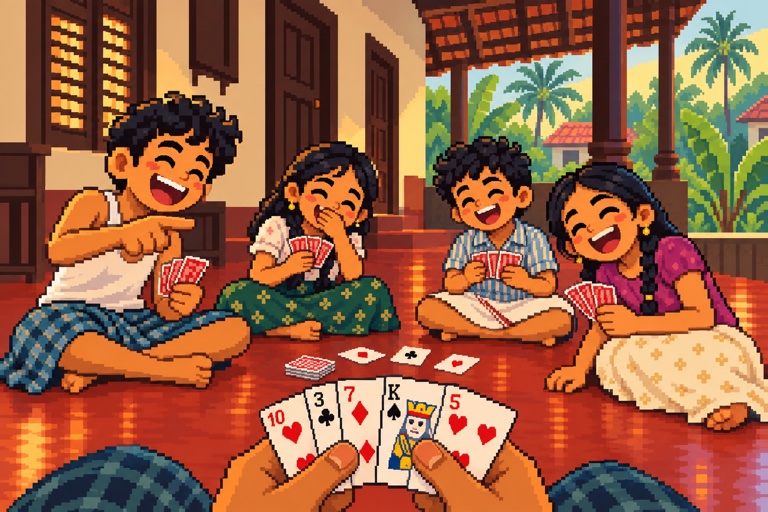
School’s out and the cousins are on the veranda. Find your feet: they play on instinct.



 Meet them
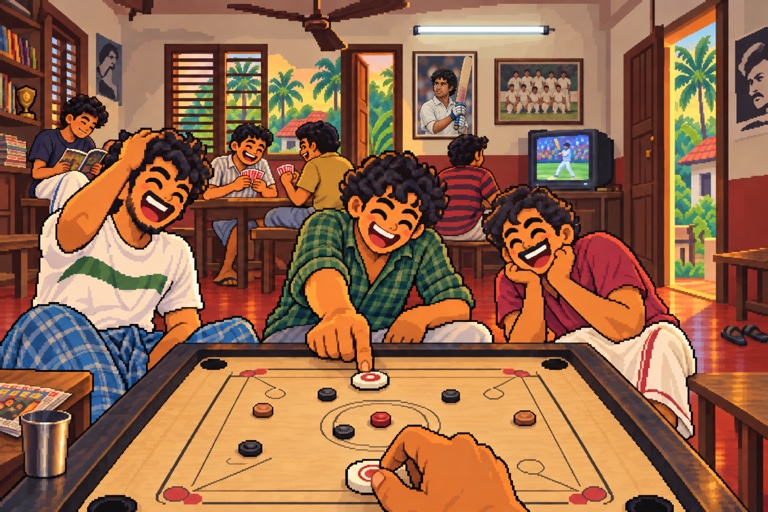
Carrom’s done, cards are out. The table is watching the suits now.



 Meet them

Tea, newspapers and careful players who count cards and spot danger.



 Meet them
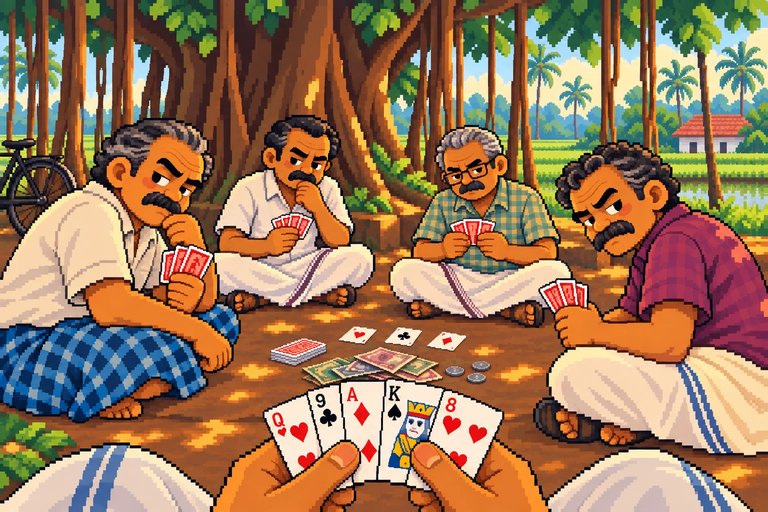
The elders’ table in the shade. Experienced players who control the game.



 Meet them
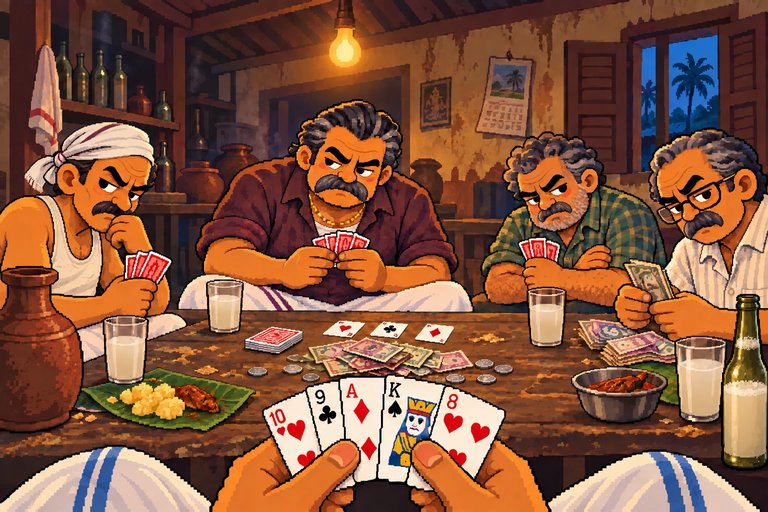 HARDCORE
Hardcore. Nothing is enforced: bluff, watch, and call a cheat when you catch one.



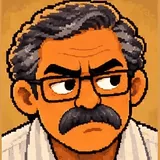 Meet them
THE REGULARS
Every table has its own four regulars, and every one of them plays differently. Pick a table and meet who you’re up against.
Loud, cheeky and always first to point at the loser.
“Loser does my homework!”

Arms crossed, chin up. She has never lost a game. Just ask her.
“I never lose at cards.”

Laughs at everyone’s bad luck, including his own.
“No crying this time, okay?”

Sharp, proud, and quick to tell you who taught her.
“Ammachi says I’m the best.”

Fresh off a carrom win and still warmed up.
“Carrom’s done. Cards now.”

Keeps the club rules, and the tea money.
“Club rule: loser buys tea.”
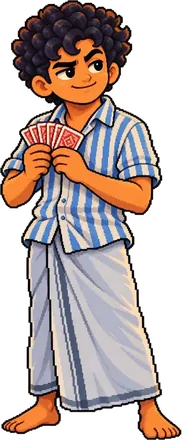
Spent all week shuffling, and wants you to know it.
“I’ve been practising, machane.”

Glasses on, eyebrow up, no patience for new boys.
“Try not to cry, new boy.”

Never deals before his next glass of tea.
“One more chai, then we deal.”

Forty years at this table. He has seen every trick.
“Forty years I’ve played here.”

Reads every page, but the game always comes first.
“Paper can wait. Deal!”
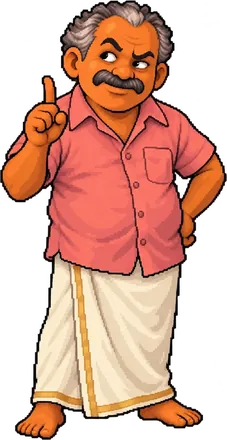
Raises a finger and watches your spades.
“Watch your spades, mone.”
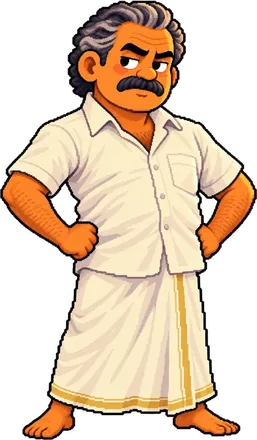
Hands on hips. The shade, and the table, are his.
“Under this tree, I’m the king.”

Calm and welcoming, right up until he strikes.
“Sit. The shade is free.”
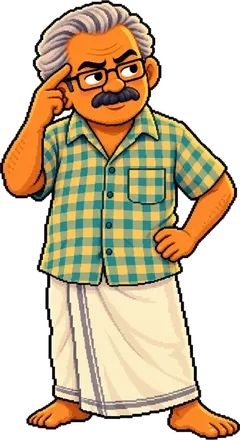
Remembers every card that has been played.
“I count every card, you know.”
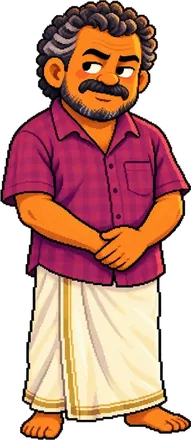
Folds his hands, waits, and wins.
“Patience wins. Always.”

Squares up and dares you to cheat.
“Cheat if you dare.”
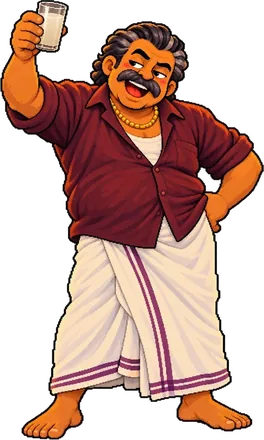
Always calling for another round of kallu.
“Another round of kallu!”
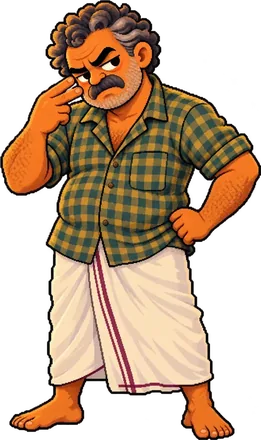
Nothing at this table gets past his eyes.
“I see everything, mone.”
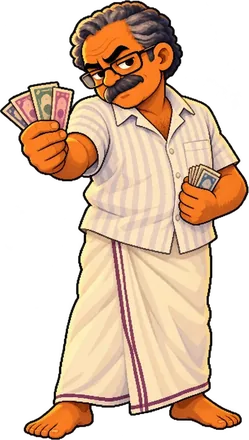
Counts the notes and makes sure the loser pays.
“Loser pays the bill.”
At the Kallu Shaap nothing is enforced. Lie about your suit, play out of turn, and call a cheat if you catch one.
Bots only see what a real player would. The higher the table, the more carefully they count the cards.
Play as a guest, or sign in with Apple or Google to keep your coins and tables on any phone.